Zoning and Land Use in India | Laws, Types, Colour Codes, and Rezoning Process
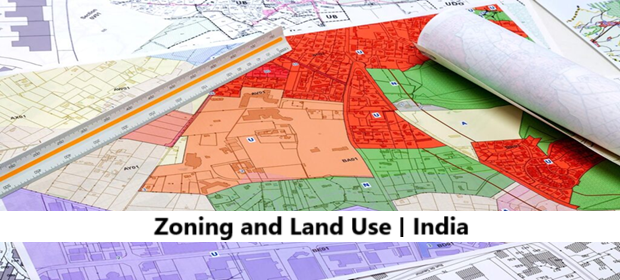
Urban planning in India depends heavily on zoning and land use policies. Zoning is the process of dividing large land areas into smaller categories such as residential, commercial, industrial, agricultural, and public spaces. These divisions are essential for balanced growth of cities and townships, ensuring that housing, infrastructure, and industries develop without clashing with one another.
By creating clear rules, zoning prevents random and unregulated construction. It allows city planners to decide where homes should be built, where industries should operate, and where public institutions like schools and hospitals should be located. In short, zoning is the backbone of India’s real estate development and urban growth.
Importance of Zoning in India
The purpose of zoning is not just to divide land but also to ensure its proper and safe use. Each zone has restrictions that maintain order and protect public interest. For example, a residential zone may not allow heavy industrial activity, while commercial zones are created in areas that can handle more traffic and business activities.
Zoning laws also protect citizens from unsafe or incompatible developments. Without them, factories could be built next to schools, or noisy markets could disturb residential neighborhoods. Proper zoning supports sustainable real estate growth, protects property values, and improves the overall quality of life in cities.
Types of Zoning and Land Use in India
Land use in urban areas is broadly divided into several categories. Each type of zone serves a specific purpose and is subject to its own set of rules and regulations.
| Zone Type | Description and Examples |
|---|---|
| Residential Zone | Houses, apartments, townships; includes low-density (houses), medium-density (townhouses), and high-density (apartments). |
| Commercial Zone | Offices, restaurants, shops, malls, warehouses, and other business centers. |
| Industrial Zone | Factories, plants, storage facilities, and shipping hubs for light, medium, or heavy industries. |
| Agricultural Zone | Land for farming, cattle rearing, ranches, and pastures. |
| Transportation Zone | Roads, railways, airports, metro stations, and related infrastructure. |
| Public Use Zone | Schools, hospitals, government offices, places of worship. |
| Recreational Zone | Parks, gardens, playgrounds, golf courses, and open green spaces. |
Some cities also allow mixed-use zoning, where residential and commercial activities are combined. This category is becoming increasingly common in India’s growing urban centers.
Colour Codes in Land Use Maps
City planners and authorities use land use maps to show zoning divisions. These maps use specific colours to make it easy to identify different types of land use.
| Colour Code | Land Use Purpose |
|---|---|
| Dark Blue | Retail – hotels, eateries, malls, cinema halls |
| Light Blue | Commercial – offices, central business districts |
| Dark Yellow | Mixed-use residential – up to 33% commercial activity allowed (grocery stores, clinics) |
| Light Yellow | Primary residential housing areas |
| Gray | Heavy industries |
| Purple (Dark Shade) | High-tech industries |
| Purple (Light Shade) | General industries |
| Green | Agricultural land, forests, gardens, cemeteries, lakes |
| Red | Public and semi-public use – schools, temples, hospitals |
These maps serve as official guides for developers, real estate investors, and property owners to understand the exact classification of land.
Traditional and Modern Zoning in India
Traditionally, Indian cities followed Euclidean zoning, which created clear boundaries between residential, commercial, and industrial areas. However, with limited land and increasing urbanization, this strict separation is changing.
Modern urban planning now emphasizes mixed-use zoning, where housing, businesses, and small industries coexist in the same area. For example, in a mixed residential zone, you may find apartments alongside banks, bakeries, small shops, and clinics. This approach reduces commuting time, improves convenience, and supports smart city development.
The Rezoning Process in India
Changing the classification of land from one use to another is called Change of Land Use (CLU) or land conversion. Rezoning is a major step that involves several legal approvals. It is different from a “variance,” which is only a minor exemption from an existing zoning rule.
Step-by-Step Rezoning Process
-
Identify the Governing Authority
Land use is regulated by local urban development authorities, municipalities, or the District Collector’s office. -
Submit an Application
A written request must be filed with the authority, stating the current use of land and the intended new use (e.g., agricultural to commercial). -
Attach Required Documents
-
Proof of land ownership (sale deed, title deed, mutation papers)
-
Revenue records such as Khatauni, Khasra, or RTC
-
NOCs from departments like Pollution Control Board, Fire Department, Airport Authority (if required)
-
Site plans and building layouts
-
Affidavit confirming the purpose of conversion
-
-
Verification and Site Inspection
Authorities check the documents and may conduct a site visit. -
Payment of Conversion Charges
Conversion fees are usually calculated as a percentage of the government’s circle rate of land. -
Approval and Land Conversion Certificate (LCU)
Once approved, an LCU certificate is issued, legally permitting the new land use. -
Implementation Period
The applicant must use the land for the approved purpose within a set timeframe (often one year), or the approval can be cancelled.
Challenges in Rezoning
Although the process is structured, rezoning in India can be complicated. Multiple approvals, high charges, and variations in state laws often delay the process. Developers and landowners must carefully study the local rules before applying for CLU to avoid setbacks.
Conclusion - Zoning in India
Zoning and land use classification are critical for India’s urban growth. They provide structure, prevent incompatible developments, and ensure that land resources are used efficiently. With increasing urbanization, mixed-use zoning is becoming the future of Indian cities, offering convenience and smarter neighborhood planning.
For real estate investors, property developers, and landowners, understanding zoning laws and the rezoning process in India is essential. By following the right procedures, securing approvals, and complying with zoning rules, one can unlock the full potential of land investments while contributing to sustainable city development.

Latest Posts